Bright Doodle Alphabet a–Z 0–9: A Practical Evaluation for Classroom and Creative Projects
In the landscape of educational resources and digital design assets, finding materials that balance aesthetic appeal with functional utility can be challenging. The Bright Doodle Alphabet a–Z 0–9 represents a specific category of high-resolution graphic sets designed to inject energy into learning environments. Unlike standard serif or sans-serif fonts that prioritize readability above all else, this collection focuses on a playful, hand-drawn aesthetic intended to engage younger audiences. For educators, curriculum designers, and parents looking to enhance their teaching materials, understanding the specific capabilities and limitations of this bundle is essential before integrating it into a workflow.
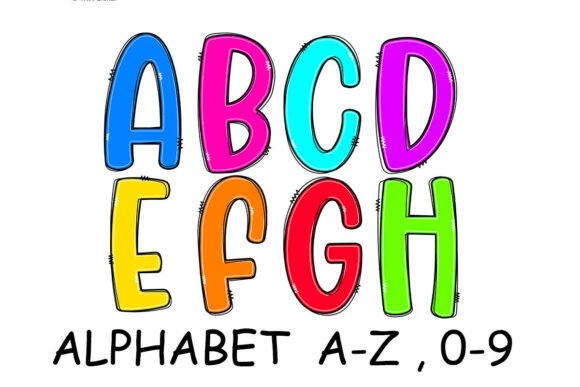
This resource provides a comprehensive set of characters, ranging from letters A through Z to numbers 0 through 9. The defining characteristic of the Bright Doodle Alphabet a–Z 0–9 is its vibrant color palette and doodle-style rendering. These are not merely monochrome clip art; they are delivered as high-resolution PNG files, which allows for transparency and flexibility in how they are layered onto backgrounds. Whether the goal is creating a bulletin board, designing a worksheet, or developing a digital presentation, the format supports immediate use without requiring extensive graphic design software skills.
Understanding the Format and Visual Distinctiveness
The distinction between this set and other alphabet resources lies primarily in its file type and artistic style. Many traditional font packages require the user to have specific software installed to render the text correctly, and changing colors often requires manipulating text properties within that software. In contrast, the Bright Doodle Alphabet a–Z 0–9 comes as pre-rendered images. This approach offers a significant advantage for users who need consistency across different platforms. Once an image is created, it looks the same whether viewed on a teacher's laptop, printed on a classroom printer, or embedded in a website.
The "doodle" aspect implies a slight irregularity in line weight and shape, mimicking the look of a child's drawing or a quick sketch. This visual texture is distinct from vector-based clip art, which often features clean, geometric lines. The bright, kid-friendly colors are integral to the product's identity. They are chosen specifically to capture attention and create a welcoming atmosphere. When evaluating these assets, it is important to recognize that the high resolution ensures that the details of the doodles remain crisp even when scaled up for large-format prints like posters or banners.
Comparative Analysis: Raster vs. Vector and Static vs. Dynamic
When selecting graphics for school projects, one must consider the tradeoffs between raster images (like PNGs) and vector graphics (like SVG or AI files). The Bright Doodle Alphabet a–Z 0–9 utilizes the raster format. This means the images are made of pixels. The primary benefit here is ease of use; there is no need to trace outlines or adjust anchor points. However, the limitation is that scaling them beyond their original dimensions can result in pixelation. For most classroom applications—such as flashcards, labels, or standard worksheets—the provided resolution is more than sufficient.
In comparison, vector-based alternatives allow for infinite scalability without quality loss. If a project requires resizing a single letter from the size of a postage stamp to the size of a billboard, vectors are superior. However, the Bright Doodle Alphabet a–Z 0–9 excels in scenarios where speed and visual impact are prioritized over extreme resizing. The vibrant colors are baked into the file, meaning the user does not need to spend time recoloring each individual character to match a specific theme. This saves considerable time during the planning phase of lesson preparation.
Another point of comparison is static versus dynamic content. Some modern educational tools offer interactive alphabets that change based on user input. While powerful, these require technical setup and often lack the tactile feel of physical printables. The Bright Doodle Alphabet a–Z 0–9 serves as a bridge between digital convenience and physical application. Because they are ready-to-print PNGs, they can be used to create tangible learning aids that children can touch and manipulate, which is a crucial component of early childhood development.
Practical Applications and Versatility
The versatility of this set makes it suitable for a wide array of educational contexts. Teachers often struggle with the monotony of standard black-and-white worksheets. By incorporating the colorful elements of the Bright Doodle Alphabet a–Z 0–9, educators can transform mundane practice sheets into engaging activities. For instance, using the numbered digits 0–9 in bright hues can make math problems more inviting for students who find numerals intimidating.
- Bulletin Boards: The high-contrast colors ensure visibility from across the room, making them ideal for displaying student work or daily schedules.
- Crafts and Cut-outs: The clear background of the PNG files allows for easy cutting and pasting onto construction paper or cardstock without white borders interfering with the design.
- Digital Projects: For remote learning or presentations, these images load quickly and maintain their clarity on screens of various sizes.
- Labels and Organization: Creating labeled bins or shelves becomes effortless when the letters are already styled to match a cohesive theme.
Evaluating Suitability and Potential Limitations
While the Bright Doodle Alphabet a–Z 0–9 offers numerous benefits, it is not a universal solution for every design need. The decision to use this set should depend on the specific requirements of the project. One notable limitation is the fixed nature of the colors. If a classroom has a strict color scheme that does not align with the preset vibrant tones of the doodles, recoloring the images can be difficult because they are raster graphics. Users requiring precise brand alignment might find themselves needing to invest time in editing software to alter the hues, whereas a vector set would allow for instant color swapping.
Furthermore, the "doodle" style may not be appropriate for all age groups or subjects. Older students or those working on formal academic papers may require a more professional or minimalist aesthetic. The playful nature of this alphabet is best suited for early education, elementary levels, and creative arts. It is less likely to be effective for high school physics diagrams or adult literacy programs where clarity and neutrality are paramount.
Another consideration is the file management aspect. High-resolution PNG files can be larger in size compared to simple text files or low-resolution JPEGs. For teachers managing limited storage space or slow internet connections, downloading and organizing a full bundle of A–Z and 0–9 images requires a bit more digital housekeeping. However, the time saved on design and layout typically outweighs the initial effort of file organization.
Making the Final Decision
Choosing the right educational resource involves balancing budget, time, and pedagogical goals. If the objective is to quickly produce visually stimulating materials that require minimal technical skill, the Bright Doodle Alphabet a–Z 0–9 stands out as a strong candidate. Its readiness for print and the inclusion of both letters and numbers provide a complete toolkit for back-to-school preparations and everyday classroom management.
However, if the project demands custom branding, infinite scalability, or integration into complex interactive software, users might need to explore alternative options such as editable vector suites or specialized educational apps. The key is to assess the end-use case. For decorating a room, making flashcards, or adding flair to a digital slide deck, the advantages of this bundle are clear. It transforms standard typography into a visual experience that resonates with children.
In summary, the Bright Doodle Alphabet a–Z 0–9 fills a specific niche in the market for accessible, high-quality educational graphics. It removes the barrier of technical complexity while delivering a cheerful aesthetic that supports engagement. By understanding its strengths in terms of visual impact and ease of use, and acknowledging its limitations regarding customization and scalability, educators can make informed decisions that best serve their students' needs. Ultimately, the goal of any classroom resource is to facilitate learning, and this set provides a fun, reliable foundation for achieving that objective.